Rethinking the Caribbean's Economic Future: Fireside Chat with Economist Marla Dukharan
Economist Marla Dukharan on extractive economic legacies, the cost of fragmentation, and why the next generation of Caribbean companies should be regional by design from day one.

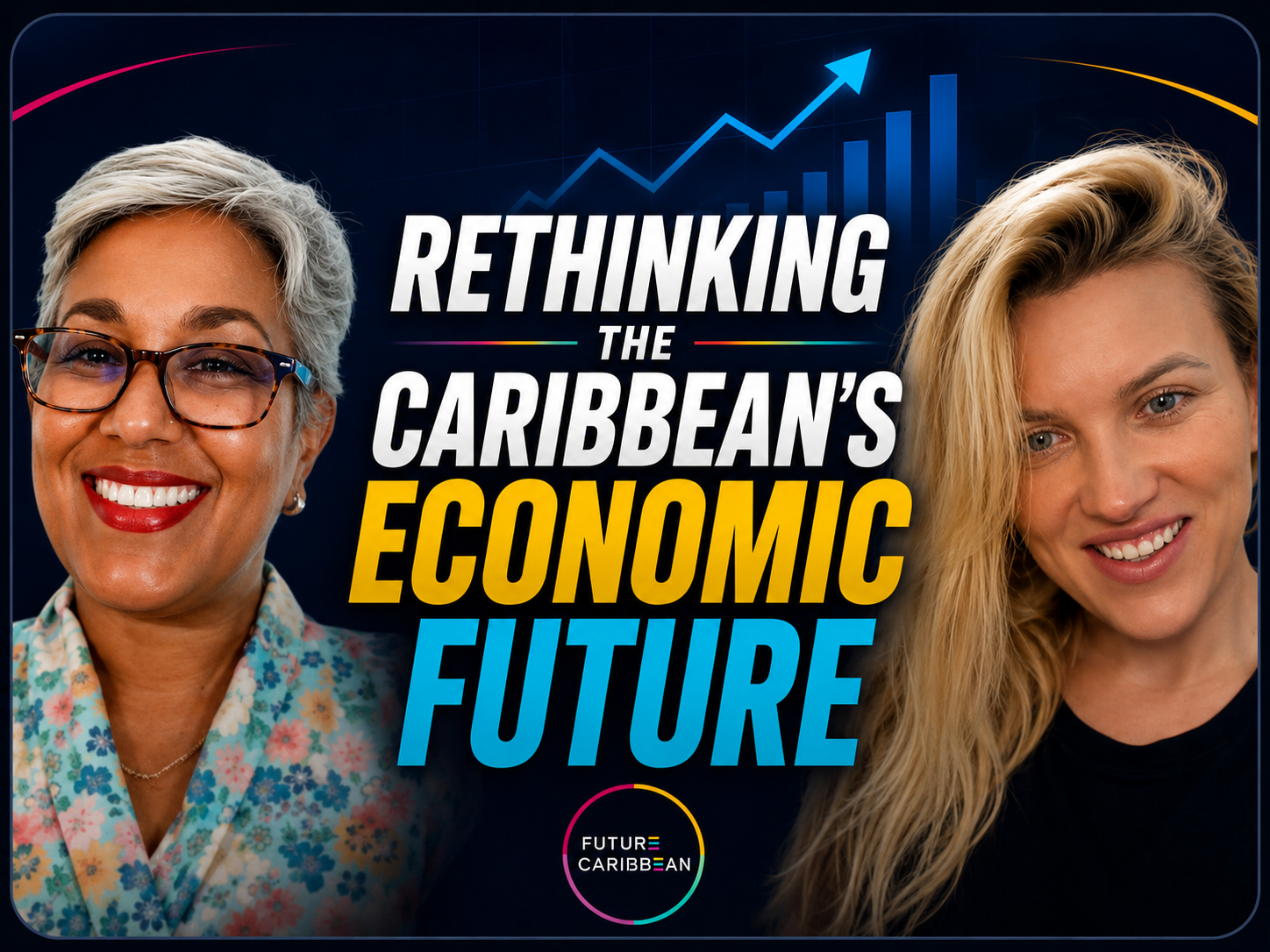
Future Caribbean hosted a fireside chat with renowned economist Marla Dukharan, led by Lily Dash, exploring the structural forces that continue to shape the Caribbean economy — and what the next generation of builders can do differently.
The conversation centered on a powerful idea: many of the region's economic systems were historically designed for extraction rather than domestic prosperity. Dukharan argued that these structures still influence how capital, trade, education, tourism, and public institutions operate today.
From Extractive Systems to Local Value Creation
Dukharan pointed to the Caribbean's heavy dependence on imports as one of the clearest signs of this legacy. She also highlighted tourism and offshore finance, where significant value can be generated in the region while much of the wealth ultimately flows elsewhere.
The alternative is to build more locally owned, locally operated, and locally focused businesses — companies that serve regional needs, retain profits locally, reinvest in productive capacity, and expand across Caribbean markets.
For builders, the implication is clear: the opportunity is not just to digitize existing systems, but to create new infrastructure that allows more value to stay, circulate, and compound within the region.
Fragmentation Is One of the Region's Biggest Costs
Another major theme was fragmentation.
With dozens of jurisdictions, currencies, regulators, and administrative systems, Caribbean countries frequently duplicate effort while individually operating with limited scale and negotiating power.
Dukharan emphasized that the region is greater than the sum of its parts, but that deeper cooperation has repeatedly been difficult. She also pointed out that many of the strongest examples of regional integration have actually come from the private sector, through companies that successfully operate across multiple Caribbean markets.
That creates a major opportunity for technology.
Digital infrastructure can allow builders to create systems that operate across borders without waiting for every government or institution to move in lockstep. The next generation of Caribbean companies can be regional by design from day one.
Technology Can Help Us Transcend Legacy Constraints
One of the most optimistic themes of the discussion was that builders today have tools previous generations did not.
Technology makes it possible to create networks, businesses, platforms, and even new economic infrastructure that can operate outside some of the limitations of traditional systems.
Dukharan described the current generation of builders as having the ability to "transcend the limitations" created by historically extractive institutions.
The discussion also explored special economic zones as examples of how new systems can be tested in a focused environment before expanding. In a digital era, that raises an even bigger possibility: could new regional economic infrastructure exist virtually, connecting talent, capital, companies, and markets across all 36 Caribbean territories?
Build for the Future, Not the Past
When asked where builders should focus, Dukharan identified three major priorities:
Energy, because almost every part of economic development depends on affordable and reliable power.
Regional security, because economic progress cannot thrive without stability.
And brain drain, where technology now creates an opportunity for Caribbean talent to live in the region while working globally, contributing knowledge and building opportunities locally.
The broader message from the fireside chat was that the Caribbean does not have to inherit its future from its past.
The region can build systems that prioritize local ownership, regional scale, knowledge transfer, productive investment, energy independence, and technology-enabled collaboration.
For the next generation of Caribbean builders, the challenge is not simply to work within existing systems.
It is to build better ones.
Inside Future Caribbean's 12-Hour Demo Day: The Projects Presented
Across ten tracks, Caribbean innovators explored how AI could respond to real challenges — from energy and transportation to finance, climate resilience, healthcare, and the creative economy.
A Glimpse Into Future Caribbean's Demo Weekend
A weekend celebrating Caribbean innovation, AI-powered problem-solving, and the people building solutions for the region's future.